

The Spirit of Detroit
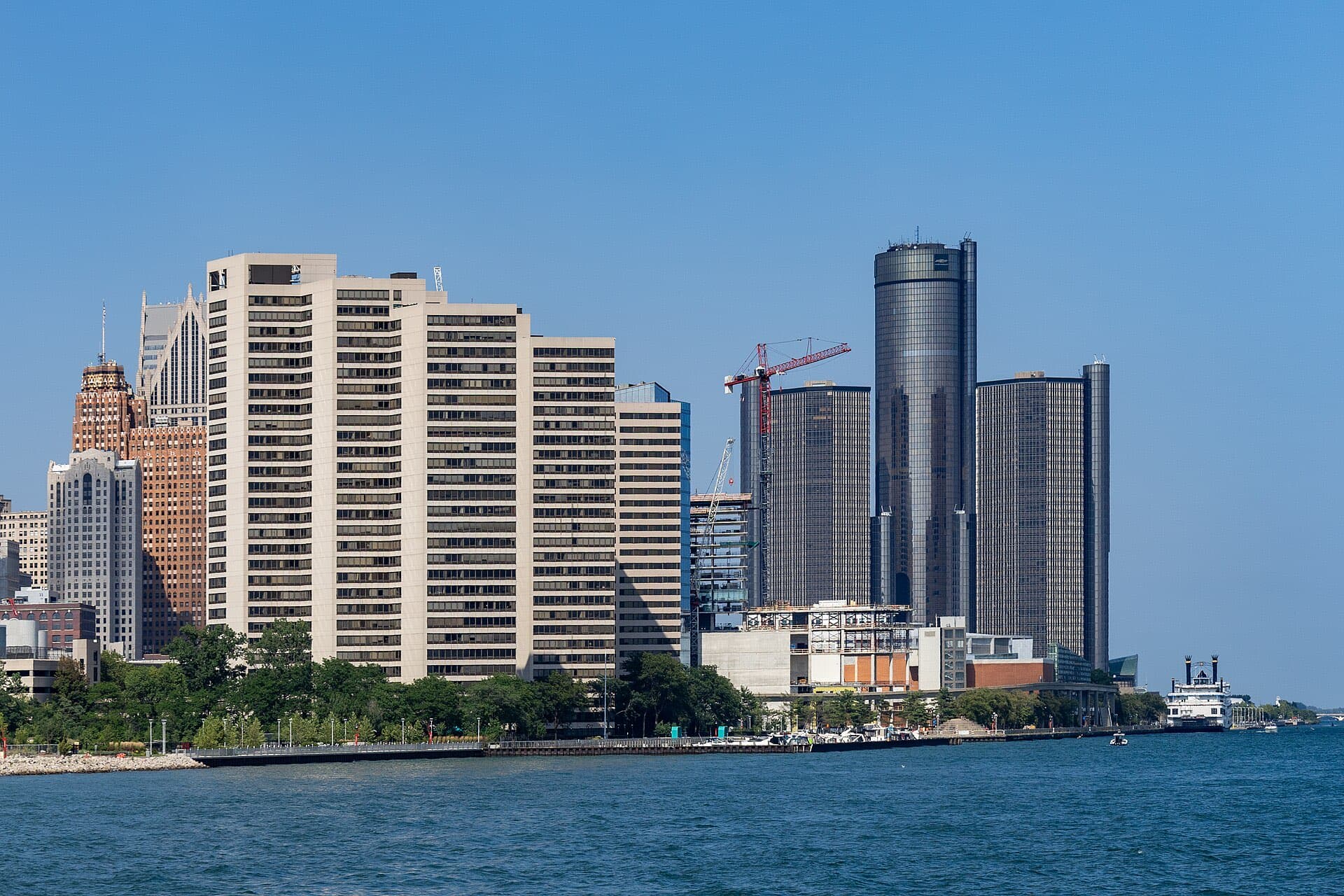
The Detroit skyline at night, glowing across the Detroit River.
Developing storyThe Spirit of Detroit · Updated June 2026

Detroit is deciding whether to put police drones in the sky.

The Police Department says drone technology is on the way. There's no public vote yet — and key questions about the vendor, the cost, and the rules remain unanswered. Here's what we know, what we don't, and how to take part before anything is decided.

No public vote yet
The program is still being shaped — which is when residents have the most say.
Vendor & cost: undisclosed
Which company, and how much, hasn't been made public. We're digging.
2 public meetings
June 30 (City Council) and July 2 (Police Commissioners).

The main story

What's happening, in plain language

The Detroit Police Department has said first-responder drones are coming — aircraft that would launch on emergency calls and stream live video back to police. Several neighboring suburbs have already started their own programs.

Detroit's isn't final. There's no approved program, no publicly named company, and no published cost. That's exactly why this moment matters: the decisions that will define how — or whether — drones fly over our neighborhoods haven't been made yet. Once the cameras are bought and the systems are running, the rules only get harder to change.

We're reporting this out: who the vendor is, how it would be paid for, who decides, and what protections exist. As we confirm details, we'll publish them here — with the receipts.

How Detroit got here — the 10-year arc →

Take part this week

Two open meetings where residents can ask questions and comment: Tue June 30, 10am (City Council) and Thu July 2, 3pm (Police Commissioners).

Why many residents are urging caution

Six things worth knowing

  • 01

    The track record isn't there

    Detroit's existing camera program, Project Green Light, was rated “ineffective” at reducing violent crime by the U.S. Department of Justice's research arm — yet the city keeps expanding surveillance.

    Source · DOJ / National Institute of Justice
  • 02

    These programs tend to grow

    In Chula Vista, California, the first drone-as-first-responder program logged more than 14,000 flights — including for loud music and minor complaints. What's pitched for emergencies rarely stays there.

    Source · EFF
  • 03

    The data can travel further than you think

    Police camera and license-plate networks have been searched by federal agencies and across state lines. Drone footage could feed the same systems unless the rules forbid it — in writing, up front.

    Source · 404 Media; EFF
  • 04

    Detroit has been burned before

    The city's facial-recognition system led to wrongful arrests of residents, including Robert Williams. Federal testing shows the technology misidentifies Black faces far more often. The history is reason enough to go slowly.

    Source · ACLU; NIST
  • 05

    The rules are supposed to come first

    In 2025 a Michigan appeals court found Detroit had approved surveillance technology without the public review its own ordinance requires. Process matters — and it has been skipped before.

    Source · BridgeDetroit
  • 06

    And we still don't know the basics

    Who is the vendor? What will it cost? How long is footage kept, and who can see it? These should be answered in public before a vote — not after.

    Source · Open questions
566
plate readers already running in Detroit
1.4 GW
one AI data center ≈ a quarter of DTE's load
83,345
Flock cameras swept in one out-of-state search
14 days
the public-notice window that is our strongest lever

Upcoming public meetings

Two ways to take part next week.

Detroit is discussing new drone technology, and there are two public meetings where residents can learn more, ask questions, and share their perspective. Everyone is welcome.

Detroit City Council

Tuesday, June 30

10:00 AM

Topic: DPD drone technology

Coleman A. Young Municipal Center · Erma L. Henderson Auditorium, 13th Floor

2 Woodward Ave, Detroit, MI 48226

City Council reviews contracts and budgets. It's an open meeting — come listen, learn how the process works, ask questions, and share your perspective during public comment.

Board of Police Commissioners

Thursday, July 2

3:00 PM

Topic: DPD drone technology

Detroit Public Safety Headquarters

1301 3rd Street, Detroit, MI 48226

The civilian board that reviews police policy. Sign up for Oral Communications to ask questions and share your perspective. A good decision benefits from hearing the whole community.

Come listen. Ask questions. Make a public comment. You don't need to be an expert — you just need to be there. Times and rooms can change; confirm on the official agenda before you go.

Looking ahead

How could these choices
affect your future?

AI data centers bring major investment — and they use a lot of energy and water, which households share through the grid. How that shapes future rates depends on the decisions made now. Move the sliders to explore two paths for your own bills. It's an illustration to make the tradeoffs concrete, not a prediction.

Make it yours

Your bills today

$
$
2032
20262035

Higher-demand path, 2032

$301

per month

Managed-growth path, 2032

$242

per month

That's a difference of $59/mo — about $2,300 between the two paths from 2026 to 2032. Which path we're on depends on choices being made now.

Higher-demand path Managed-growth path
How this is calculated (and why it's honest)

This is an illustrative projection, not a prediction, meant to make a complex topic personal. It compounds your current bills using two annual-increase assumptions drawn from the research: a higher-demand path (+7%/yr electric, +6%/yr water) and a managed-growth path (+3%/yr electric, +2.5%/yr water).

The ranges reflect published analysis: estimates that a gigawatt-scale data center could raise residential electricity rates without protections; DTE's data-center pipeline of up to 8.4 GW; and recent water-rate increases. Energy demand is only one factor among many, and well-designed policy and protections can change the outcome — which is exactly why the public conversation matters.

Want the receipts behind these numbers? Read the data-center case →

The question of work

When machines do the work,
what happens to the workers?

Technology doesn't only watch or compute — it reshapes who works, and how. Some jobs are created, many are temporary, and some quietly change or disappear. None of this is good or bad on its own. It simply deserves to be seen clearly, because a city's people are its real wealth.

jobs · Saline project

A large build, then a small crew

Construction (temporary)~2,500
Permanent~450

Michigan's flagship data center represents roughly $16 billion in investment. It's expected to create about 2,500 construction jobs — temporary by nature — and around 450 permanent positions once it's running. Large investment doesn't always translate into many lasting local jobs, which is part of what communities weigh.

Source · Bridge Michigan (Saline project figures)

permanent jobs (one example)

Construction jobs vs. permanent jobs

Projected1,000
Reported26

Data centers create many construction jobs, but relatively few permanent ones. In one Michigan example, a company that projected 1,000 jobs reported 26 permanent positions — which is why communities often discuss community benefits alongside the investment.

Source · TechPolicy.Press; Brookings

Public-safety work, too

The “force multiplier” question

Officials often describe drones and automated tools as a “force multiplier”— a way to do more with fewer people. Supporters say that's a real help to departments stretched thin today.

It's also fair to ask the longer question: as systems take on more of the dispatching, the first look at a scene, the analysis, and the record-keeping, what happens to those human jobs — and to the neighborhood knowledge an officer carries that a machine cannot? Both the help and the question are real.

“It's a force multiplier.”
How a Detroit-area police chief described a drone program — FOX 2 / City of Dearborn

Tasks once carried by people, increasingly shared with or shifted to automated systems:

  • 01

    Dispatch & triage

    Deciding what a call needs — increasingly shaped by automated camera and sensor feeds.

  • 02

    First presence

    A drone can reach a scene before an officer. Supporters call this a “force multiplier.”

  • 03

    Investigation & analysis

    Plate-reader networks and software surface leads that detectives once developed by hand.

  • 04

    Documentation

    Drone footage and automated logs capture what officers used to record themselves.

The point isn't that technology is the enemy of work. It's that when we invest billions in machines, it's worth asking — openly, and without fear — what we're investing in people.

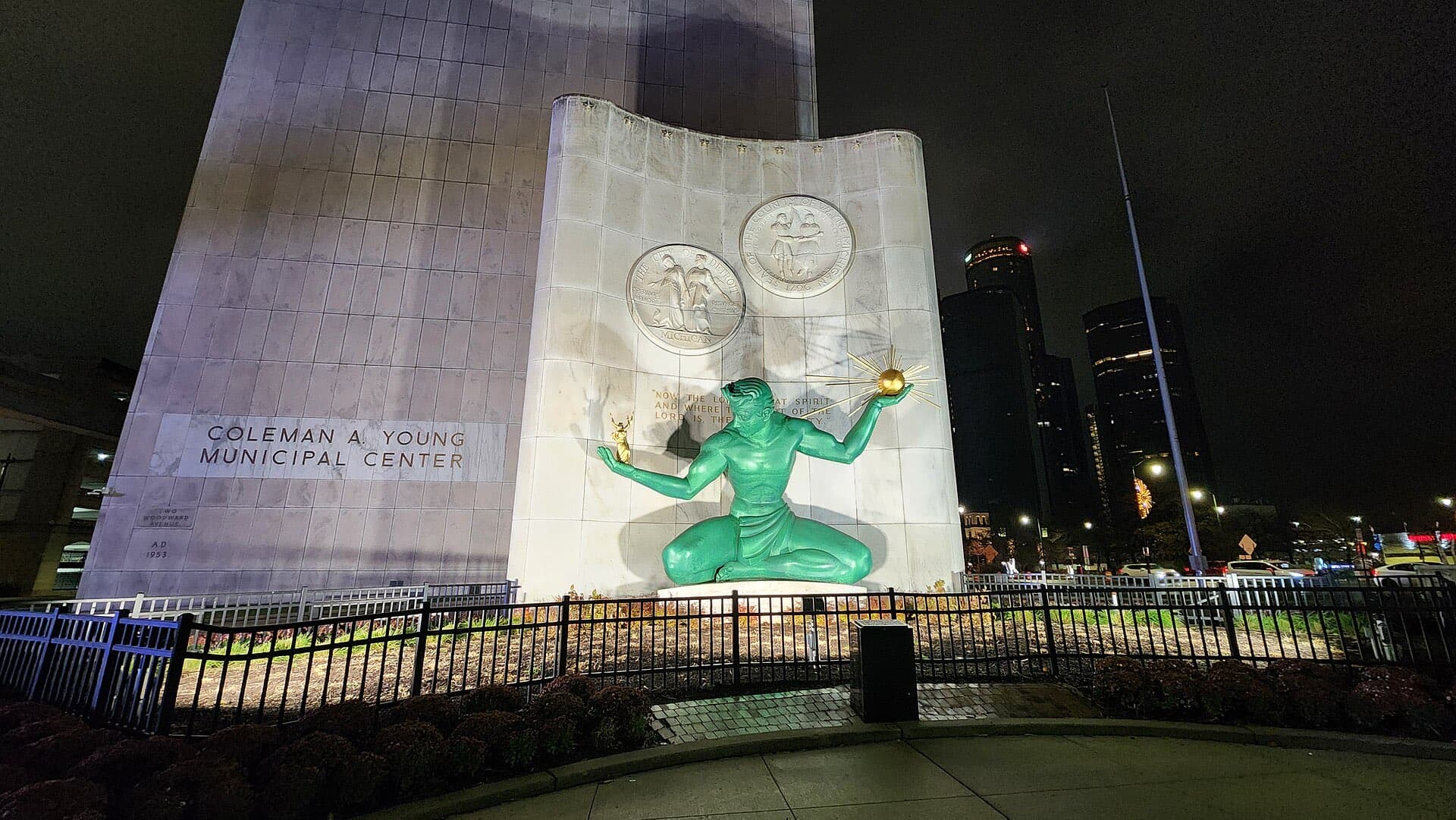
The Spirit of Detroit statue lit at night outside the Coleman A. Young Municipal Center.

The Spirit of Detroit, outside the building where City Council meets. A figure holding a family, and the light of hope.

Why this matters to all of us

A conversation worth having together.

A city is its people — families, elders, workers, students, neighbors. The choices a city makes about technology and safety touch all of them. Those choices are best made together, in the open, with good information on every side.

These are not simple yes-or-no questions. New tools can help, and they can raise real concerns. Reasonable people will weigh them differently — and that's exactly why a clear, public conversation matters.

Our goal is simple: help every Detroiter understand what's being decided, hear all perspectives, and feel welcome to take part. An informed, engaged community makes better decisions.

Learning from experience

Good information leads to good decisions.

Detroit has a useful example to learn from. When the city and the ACLU worked out a clear, public policy on facial recognition in 2024, how the technology was used changed in measurable ways. It shows what an open process can accomplish — and why getting the details right, early and together, is worth the effort.

searches

How facial-recognition use changed after new rules

2020~115
2023~100
202428
20259after the 2024 policy

DPD facial-recognition searches per year. After the city and the ACLU agreed to a detailed policy in 2024, reported use declined. It's a useful example of how a clear, public process can shape how a technology is used — the same kind of conversation now happening about drones.

Source · BridgeDetroit, April 2026

It starts with youth. It starts with community.

Strong communities are built
by investing in people.

Whatever role technology plays, the foundation of a safe, thriving city is the same: opportunity, education, mentorship, care, and trust between neighbors. These are the things that help young people grow and communities flourish — and they're worth our investment and attention.

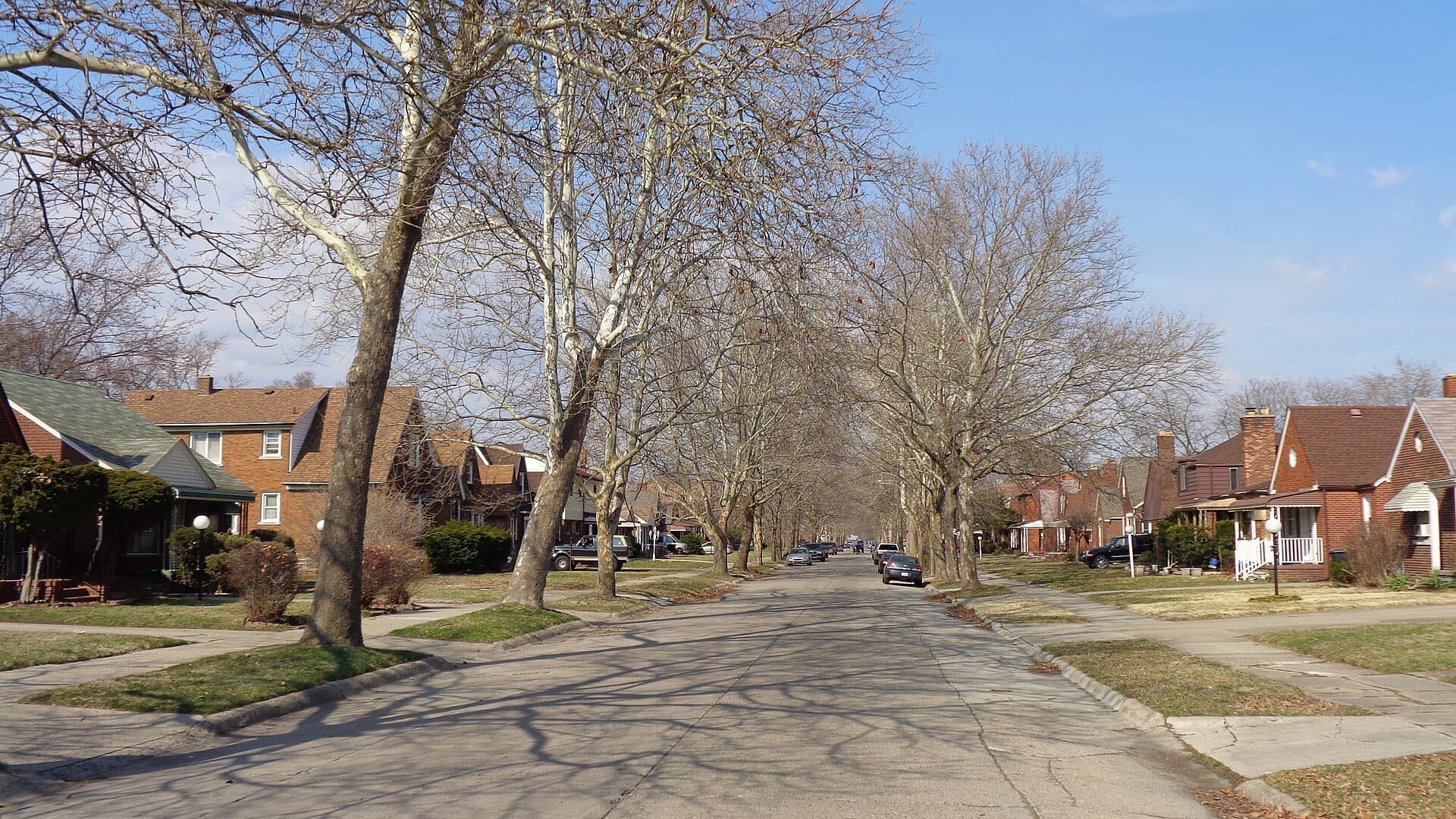
A tree-lined Detroit residential street of brick homes.

Schools that are alive

Funded classrooms, libraries open late, counselors in every building.

Real options for youth

Jobs, apprenticeships, sports, art, music, and mentorship that meet kids before crisis does.

Mental-health care

Trained responders for mental-health calls — not a camera in the sky.

Housing & stability

Keeping families housed and water running is public safety.

Conflict resolution

Community violence-intervention that interrupts harm without surveillance.

Neighborhood spaces

Rec centers, parks, and gathering places where people are trusted, not tracked.

When a city believes in its young people and invests in them, everyone shares in what they become.

Voices from across the community

Different perspectives, all worth hearing.

Officials, residents, and experts see these questions differently. Here are a few of their words, in their own voice.

Sees benefits
It will protect an individual's right to privacy. The drones will be for public areas.

Todd Bettison

then-Detroit Police Chief, on a future drone program

FOX 2 Detroit, Oct 2025
Raises questions
That's an extensive amount of travel data that's being held on people just traversing the roadways.

Gabrielle Dresner

ACLU of Michigan

Bridge Michigan
Sees benefits
Michigan needs to decide if it wants to participate in the 21st Century economy, or rest on those who came before us and spend that wealth down.

Sandy Baruah

CEO, Detroit Regional Chamber

Bridge Michigan, Dec 2025

Detroit already has a lever

How a decision actually gets made

Detroit passed a surveillance-oversight ordinance in 2021. Knowing the path is how you change the outcome.

  1. 01

    A department wants the technology

    Under Detroit's CIOGS surveillance ordinance, DPD must first prepare a public Surveillance Technology & Safety Review (STSR) — what the tech does, how it's deployed, how long data is kept, the safeguards, and the cost.

  2. 02

    The 14-day window opens

    That review must be posted publicly at least 14 days before any meeting where the purchase is discussed. This is the single most important deadline for residents — and a court has already ruled the city violated it before.

  3. 03

    The Board of Police Commissioners reviews policy

    The 11-member civilian board shapes and approves DPD's use policy. This is the earlier, less-crowded place to slow something down.

  4. 04

    City Council holds the money

    Council approves the contract and the budget. No appropriation, no technology. This is the binding chokepoint — and where a public hearing is required before acquisition.

  5. 05

    Annual reporting (if approved)

    Approved technologies must be reported on every year. Accountability doesn't end at the vote — it's something residents can keep demanding.

A city becomes what its people pay attention to. So let's pay attention — together, with clear eyes and open minds.

Show up when it counts

Decisions get made in rooms.
We'll tell you which room, and when.

The most powerful thing a resident can do is be present before the vote. Subscribe and we'll email you ahead of every City Council session, Police Commissioners meeting, and public hearing that shapes our city.

We email you when there's a meeting to show up to — City Council, Police Commissioners, public hearings. No spam, no selling your data. Unsubscribe anytime.